Block Forks
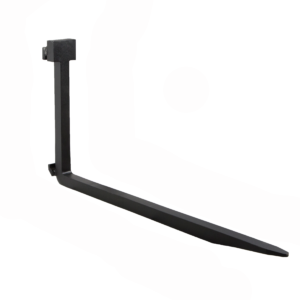
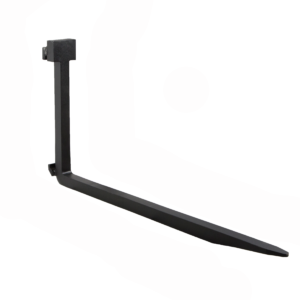
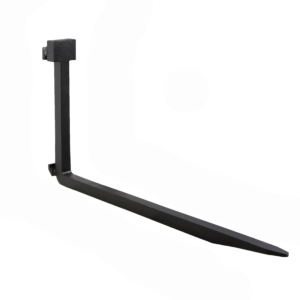
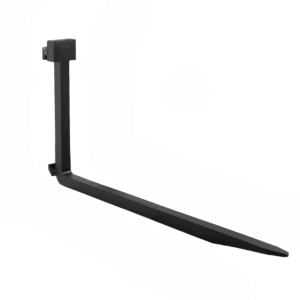
PRO-Link block forks are specialized material-handling forks for moving properly bundled brick, concrete block and similar masonry products. Their narrower blade profiles allow several forks to support a load across its width, helping construction yards, masonry suppliers and landscaping operations handle bundled materials with compatible equipment.
Unlike standard pallet forks that are commonly used as a matched pair, block or brick forks are often installed in groups of four or six. The required quantity depends on the masonry bundle, carriage width, fork spacing, individual fork ratings and the approved configuration of the machine. Buyers should use the specifications on each product page rather than assuming that every block-fork setup uses the same number of tines.
Block Forks for Brick and Masonry Handling
Block forks distribute support across multiple narrow blades so bundled masonry can be carried without relying on only two wide pallet forks. Typical applications include handling banded or cubed loads of:
– Concrete blocks
– Bricks and pavers
– Landscape wall products
– Packaged masonry materials
– Other properly secured products approved for the fork configuration
The load must remain stable and properly secured. Block forks are not intended to scoop loose brick, carry people or support a load that exceeds the ratings of the machine, carriage or attachment.
Depending on the model, block forks may use an ITA hook-style mounting system, a Princeton-style configuration or another machine-specific connection. A fork that fits beneath the material may still be wrong for the carriage.
Buyers comparing specialized forks with standard replacements can review PRO-Link’s Class 2 ITA pallet forks. The PRO-Link pallet fork guide also explains fork terminology, carriage classes, mounting styles, load centers and measurements that should be collected before ordering. See ALLPROFORKS block forks for related Class 2, Class 3 and Princeton-style options.
Choosing the Correct Class, Size and Fork Quantity
Start by identifying the actual carriage or attachment instead of relying only on the forklift, loader or telehandler brand. Machines from the same manufacturer may use different carriage classes, hook spacing or mounting systems.
Before selecting block forks, confirm:
– Fork mounting class and connection style
– Upper- and lower-hook dimensions when applicable
– Blade length, width and thickness
– Shank height and carriage width
– Required number of forks
– Available side-to-side spacing
– Rating per fork and stated load center
– Machine and carriage capacity
– Dimensions, weight and center of gravity of the masonry bundle
Block forks may be used with properly matched forklifts, loaders, telehandlers and engineered attachment frames. The machine must have the correct carriage or frame, sufficient capacity and an approved configuration for the intended load. “Fits a telehandler” or “fits a forklift” is not enough information to establish compatibility.
Do not calculate finished-system capacity by simply multiplying one fork’s rating by four or six. Loads may not distribute evenly across every blade. The safe working limit is controlled by the lowest-rated component, including the machine, coupler, carriage, attachment, forks and actual load-center configuration.
Forks should be inspected for cracks, bending, twisting, excessive heel wear, damaged hooks, worn locks and unequal tip height. Questionable forks should be removed from service rather than straightened, heated, welded or ground without an approved repair procedure.
Browse the complete Forks & Accessories category for block forks, standard pallet forks, carriage bars and extensions. PRO-Link products are protected by a one-year limited warranty against manufacturer’s defects under the published terms.
Questions & Answers
What is the difference between block forks and standard pallet forks?
Block forks typically use narrower blades and are often installed in groups of four or six to support bundled brick, concrete block and similar masonry products. Standard pallet forks are commonly used as a pair for general pallet handling.
How many block forks does a machine need?
Many masonry-handling configurations use four or six forks, but the correct quantity depends on the approved carriage, load dimensions, fork spacing, individual ratings and machine limits. Follow the specific product and equipment requirements.
Will block forks fit any forklift or telehandler?
No. Compatibility depends on the carriage class, mounting geometry, blade dimensions, fork spacing, capacity and load center. Confirm the actual machine and carriage specifications before ordering.
Showing all 4 results