
3P56BU 3 Point Hay Bale Unroller – Tractor Attachment
$1,550.00
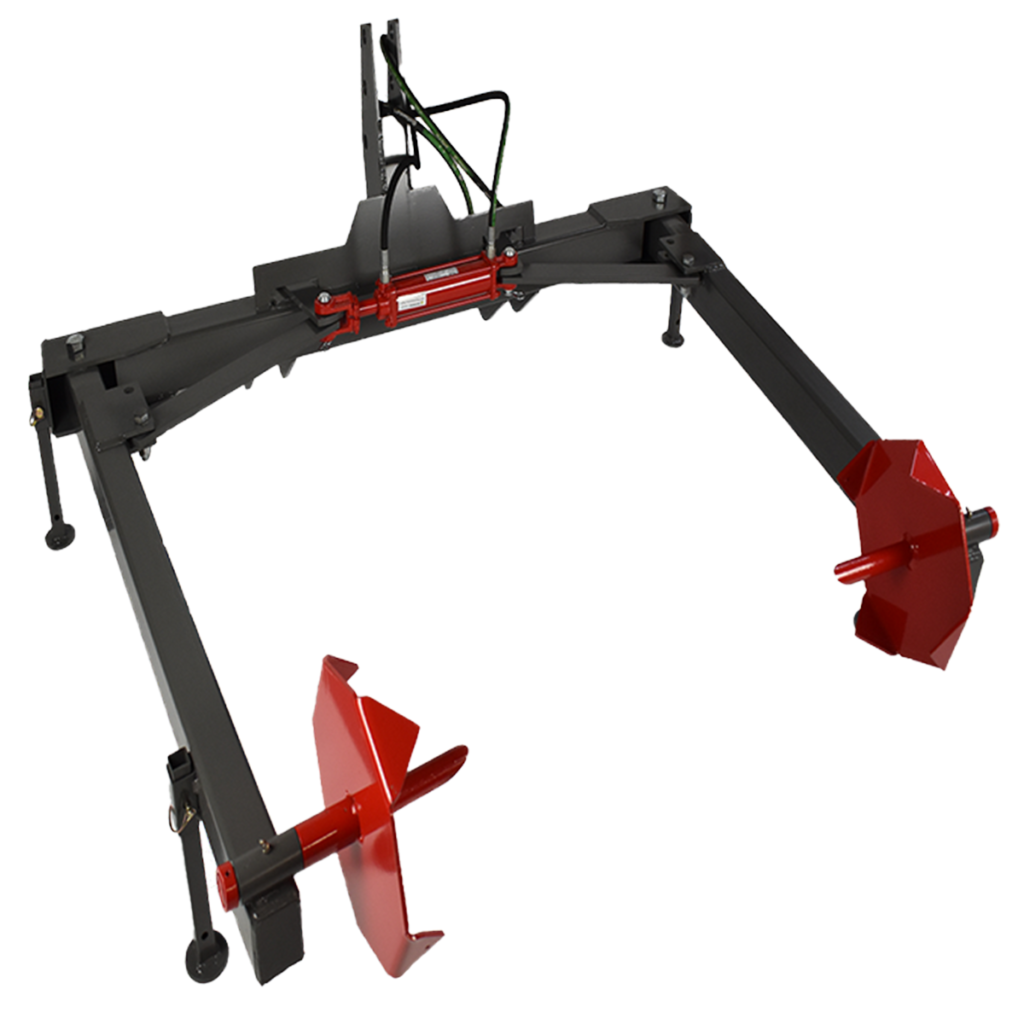
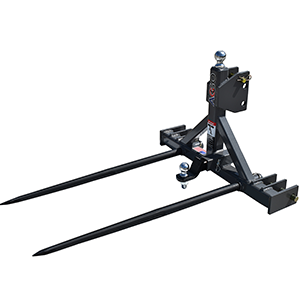
Ground-driven AG-GO rear tractor attachment for carrying and unrolling 4 foot by 5 foot or 5 foot by 6 foot round bales. The 250 lb frame uses end spike rollers and requires a properly matched three-point hitch.
Description
The AG-GO 3P56BU 3 point hay bale unroller gives livestock producers a controlled way to carry and distribute large round bales from the rear of a tractor. Designed for 4 foot by 5 foot and 5 foot by 6 foot round bales, it uses heavy-duty end spike rollers to grip the bale for transport and ground-driven rotation to spread feed as the tractor moves forward. This approach can reduce manual handling, shorten feeding routes, and place hay more evenly across pastures, lots, and feeding lanes.
Operators comparing bale-carrying, stacking, and feeding equipment can explore PRO-Link’s full selection of AG-GO hay attachments for tractors and loaders.
Ground-Driven Unrolling for Large Round Bales
The end spike rollers engage opposite sides of the round bale so it can be lifted and carried to the feeding area. To begin feeding, the operator lowers the bale until it contacts the ground. Forward tractor movement then creates the tension needed to rotate the bale and unroll the forage in a line. Because the bale turns from ground contact, the attachment does not depend on a hydraulic motor or PTO-driven unrolling mechanism.
The specified sizes cover two common large round-bale formats, but size alone does not determine whether a bale is suitable. A 4 foot by 5 foot bale may be easier for some tractors to control because it is generally smaller, while a 5 foot by 6 foot bale places more material farther behind the hitch. Actual weight still depends on crop, density, moisture, wrapping, storage conditions, and weather exposure. The tractor and hitch must safely manage the complete load throughout the lifting range.
Travel speed, bale tightness, moisture, crop type, and terrain all affect how quickly forage releases. Bermuda grass, fescue, prairie hay, mixed grass, leafy alfalfa, coarse hay, straw, and cornstalk bales may separate differently because of their texture and compression.
Wet, frozen, tightly compressed, or high-moisture bales can be heavier and harder to rotate. Wrapped silage and haylage require careful weight checking. If a bale does not turn normally, stop and inspect the setup instead of increasing speed or dragging it. Handle net wrap, twine, and other coverings according to normal feeding and livestock-safety practices.
Controlled unrolling can provide several practical benefits:
- Spread hay along a feeding lane instead of creating one pile
- Give more livestock access to the feed
- Reduce crowding around a stationary bale
- Limit excessive trampling and contamination
- Move feeding locations to manage pasture wear
- Control how much of the bale is distributed at one time
The reinforced four-stand frame helps support the attachment during handling and unrolling. Its stance contributes to steadier ground contact as the bale turns, but operators must still choose an appropriate route and avoid excessive speed, sharp turns, steep side slopes, deep ruts, soft ground, or other conditions that could affect tractor stability.
Rear Three-Point Tractor Compatibility and Feeding Use
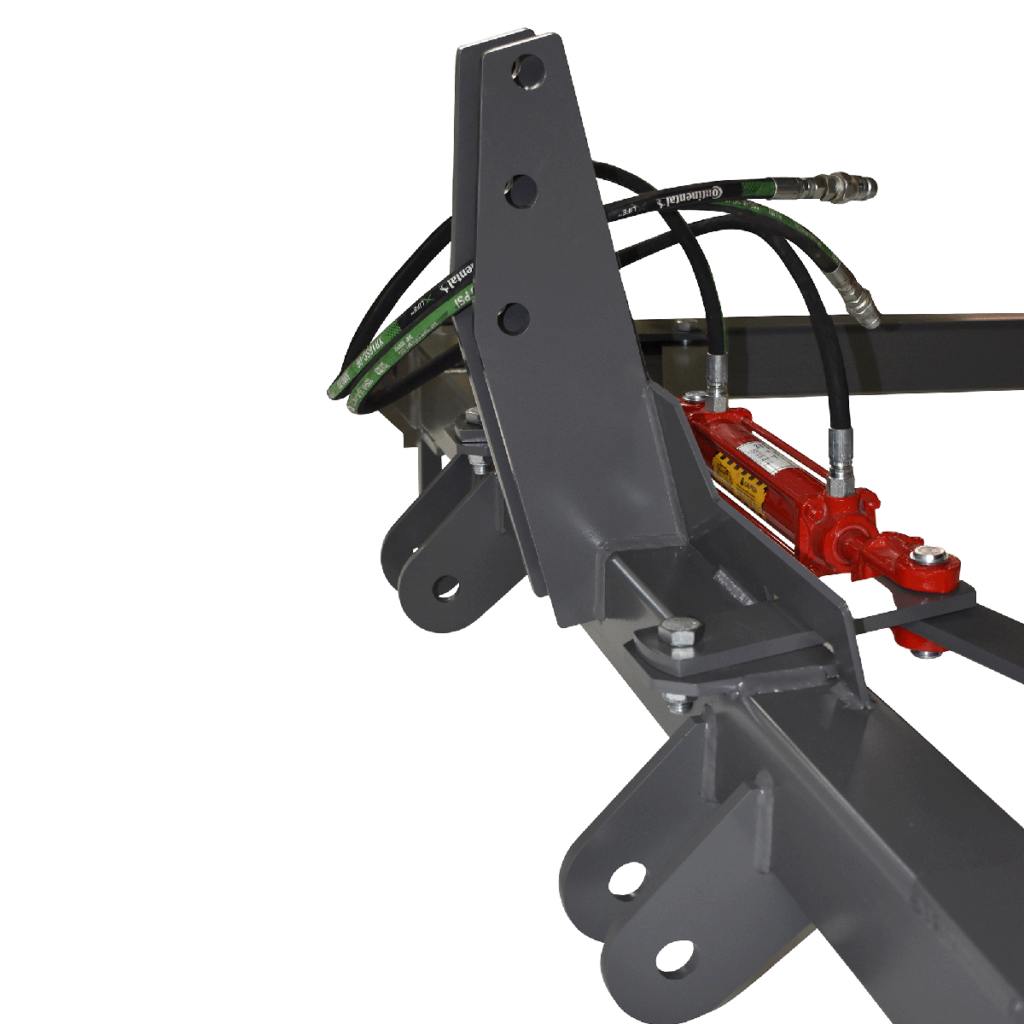
The 3P56BU connects to a properly matched rear three-point tractor hitch. The attachment weighs approximately 250 lb, so the tractor must have enough rear lift capacity for the unroller plus the heaviest intended bale. Hitch geometry, pin measurements, linkage clearance, ballast, tire condition, axle limits, ground clearance, and the tractor manufacturer’s instructions should all be checked before use.
Depending on those requirements, the unroller may be considered for properly equipped compact utility, utility, row-crop, and larger agricultural tractors. A tractor having a three-point hitch does not automatically establish compatibility. Smaller tractors may have the correct general connection but lack the machine weight, rear lift rating, hydraulic capability, or front ballast needed to carry a large wet bale safely. Tractor horsepower by itself does not answer those questions.
Some operators may carry another bale on a compatible front loader attachment while the unroller is mounted at the rear. For example, the U249-49 skid steer-style hay attachment may serve a properly matched universal quick-attach loader setup. Front and rear bale handling at the same time should only be attempted when the tractor’s axle limits, lift capacities, ballast, visibility, braking, and overall stability permit it. A front bale should not be treated as a substitute for the tractor manufacturer’s required ballast.
Farmers who only need to lift and transport a round bale from the rear, without unrolling it, can compare the 3P132-48 rear tractor hay spear.
Before each feeding route, inspect the frame, rollers, hitch points, pins, retainers, linkage, tires, and ballast. Verify secure bale engagement, carry it only high enough for clearance, and keep people and livestock away from the moving attachment.
The 3P56BU is manufactured in the USA as part of the AG-GO attachment line at PRO-Link’s production facility. Its steel construction is intended for repeated agricultural feeding work, and the attachment is protected by PRO-Link’s one-year limited warranty against manufacturer’s defects.
Questions & Answers
What bale sizes fit the 3P56BU?
The attachment is designed for 4 foot by 5 foot and 5 foot by 6 foot round hay bales. Actual suitability also depends on bale weight, density, moisture, condition, tractor lift capacity, hitch compatibility, and operating conditions.
What tractors can use this 3 point hay bale unroller?
It may be used with a compact utility, utility, row-crop, or larger agricultural tractor when the rear three-point hitch geometry matches and every applicable lift, axle, tire, ballast, and clearance requirement is satisfied. Machine size, brand, or horsepower alone does not confirm fit.
Does the 3P56BU require hydraulics to unroll hay?
The 3P56BU uses the tractor’s three-point hitch to lift, carry, lower, and position the bale, but the unrolling action is ground-driven rather than powered by a hydraulic motor. Lowering the bale into contact with the ground and moving forward at a controlled pace causes the bale to rotate between the end spike rollers.
Additional information
| Weight | 250.00 lbs |
|---|
Only logged in customers who have purchased this product may leave a review.
QR Code

Reviews
There are no reviews yet.